
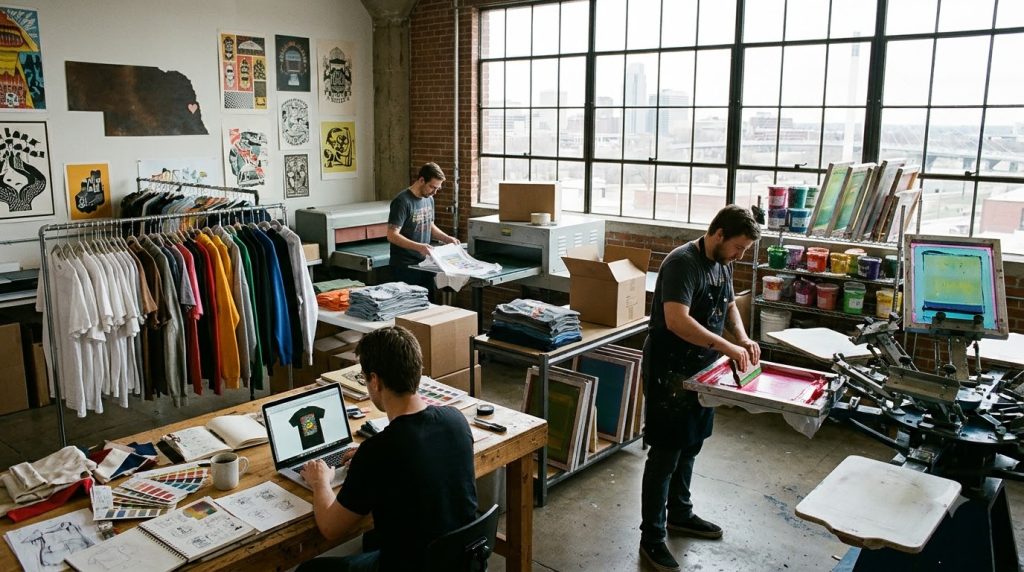
Look at a group pulling on identical apparel right before stepping out into a crowd. A dramatic shift happens almost instantly in how people perceive them. New hires sitting through company onboarding suddenly feel recognized as core team members. Trade show reps present an unshakeable front against competitors. Even a sprawling family reunion feels deeply connected just because everyone matches. Organizing local events and designing branded clothing ultimately comes down to three non-negotiables. You need dependable fabric, crisp artwork and a reliable production timeline.
Creating high-quality custom t-shirt Omaha requires following a few strict guidelines. Let us explore the exact methods shaping the custom merchandise industry right now. Getting the details right turns a basic giveaway into a beloved piece of clothing.
Quick Answer: How do I order the best custom t-shirts in Omaha?
Getting the perfect custom apparel requires choosing the right fabric, preparing high-resolution vector artwork, and selecting a printing method that fits your exact batch size. Screen printing works best regarding large bulk orders, while digital printing handles smaller detailed jobs perfectly.
Essential Graphic Principles for High-Impact Apparel
Great wearable design never happens by accident. Translating a concept from a backlit computer monitor to a textured cotton blank requires a highly disciplined visual strategy.
Keep Artwork Intentional and Minimal
Cluttered graphics are just going to completely overwhelm the human eye in motion. Your visual message has to register immediately. The passer-by has to take in your company identity at a glance without having to work out what it is from a paragraph of tiny text.
- Stick to one main focal point.
- Leave plenty of empty space around the main logo.
- Don’t cram the sponsor names all together on the back.
Restrict Your Typography Hierarchy
Typography limits matter immensely. Restrict typography to no more than two complementary font families. Pair a bold headline font alongside a neutral sans-serif font. Use the simpler typeface specifically to display secondary subtext like event dates or web addresses. Overloading a design with five different fonts creates absolute visual chaos.
Enforce Vector Art Standards
Never rely on low-resolution web screenshots taken from a social media page. True vector graphics — typically saved as native .AI, .EPS or editable .SVG files — scale indefinitely without pixel distortion. Those crisp digital files guarantee razor-sharp stencil burns on the actual press. Submitting blurry graphics inevitably leads to muddy unprofessional results nobody wants to wear.
The Core Methods Behind Custom Apparel
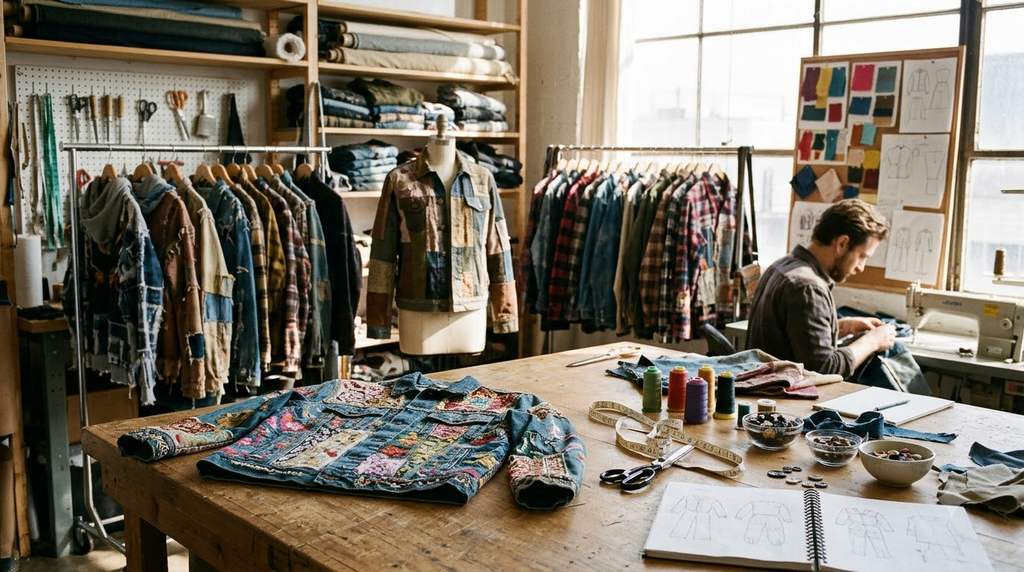
Apparel decoration relies on several entirely different physical processes. Applying ink to the garment creates flat colorful imagery while stitching builds a highly textured surface.
Traditional Screen Application
Screen printing pushes thick plastisol ink through a tightly stretched mesh stencil. A squeegee forces the ink onto the fabric before the shirt travels through a high-temperature curing oven to bake the colors into a solid state.
- The resulting print survives years of heavy washing without peeling or cracking.
- Large bulk orders benefit from a massive drop in per-unit costs.
- Colors remain incredibly vibrant on dark garments.
Digital Direct-to-Garment Printing
Specialized print heads spray water-based ink droplets straight onto the fabric. The direct application requires absolutely zero screen setup fees. The ink absorbs directly into the fibers to create a soft finish perfect regarding tiny batches of highly colorful designs.
Needle and Thread Artistry
Embroidery utilizes heavy commercial machines to drive thick threads straight into the garment. The heavy thread creates a raised tactile logo communicating absolute professionalism. Polos and jackets look fantastic featuring a thick embroidered crest. The tight stitching easily survives harsh industrial laundering.
Fabric Selection: Matching Textiles to Purpose
Sourcing Omaha custom t-shirts means evaluating exactly how different fabric weights and yarn structures interact alongside wearers throughout changing seasons. People will not wear uncomfortable promotional gear twice.
- Ring-Spun Cotton: Yarns undergo continuous spinning that smooths every individual fiber. The resulting textile is exceptionally soft and highly durable. It provides a tight lint-free surface ideal to hold crisp ink adhesion. Standard carded cotton feels rougher and holds ink poorly by comparison.
- Moisture-Wicking Polyester: Active work crews and outdoor charity runs demand athletic garments capable of regulating body heat. Moisture-wicking synthetics draw perspiration away from the skin. Those technical fabrics offer incredible comfort during intensely humid summer days. Sweaty cotton shirts cling uncomfortably — making polyester the smartest choice outdoors.
- Tri-Blend Textiles: Blending polyester, ring-spun cotton and rayon yields a signature vintage drape alongside buttery softness. Tri-blends carry a slight price premium but they boast the highest organic re-wear rate among corporate gift recipients. Employees truly love the relaxed broken-in feel of a good tri-blend shirt.
- Heavyweight Streetwear Blanks: Thicker fabrics featuring drop-shoulder cuts and boxy silhouettes represent a major generational apparel shift. Sourcing dense blanks provides a retail aesthetic younger staff naturally gravitate toward. Boxy fits move completely away from the tight athletic cuts of previous decades.
Selecting the proper textiles allows companies to build branded merchandise Omaha teams genuinely feel proud to wear daily. Finding reputable local custom women t shirt printing services guarantees your female employees receive appropriately tailored garments rather than oversized unisex cuts.
Common Pitfalls to Avoid in Bulk Apparel Procurement
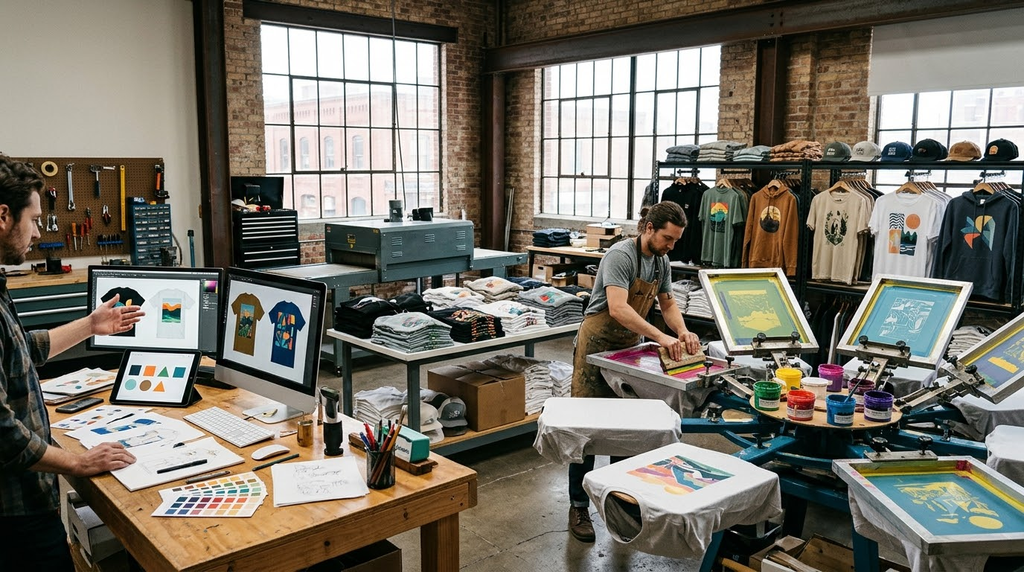
Navigating bulk custom orders successfully requires steering completely clear of these common missteps.
- Guessing Size Breakdowns: Rough approximations usually produce an excess of smalls and a painful shortage of large sizes. Send digital sign-up sheets early to capture precise garment dimensions directly from participants. Making wild guesses leaves half your team unhappy.
- Ignoring Climatic Context: Distributing heavy dark hoodies during an outdoor July picnic wastes marketing capital. Giving away ultra-thin tank tops at a late-autumn charity outing yields similarly poor results. Match garment warmth directly to the current season — thoughtful climate planning keeps the garments out of the donation bin.
- Overlook Production Lead Times: High quality production is a multi-stage technical process. If you’re expecting the same day bulk miracle you’re going to be making terrible compromises on blank availability or print complexity. Plan a two week buffer instead. If you rush it you’re going to get sloppy registration and under cured ink.
- Neglecting Unified Fit Options: Mandating a single unisex cut can alienate team members preferring relaxed cuts or long-sleeve coverage. Having parallel garment options with the same artwork is the way to maintain brand consistency and at the same time cater to individual preference. People just won’t wear something that doesn’t fit.
Key Takeaways
· Designing high-quality custom t-shirts Omaha starts with clean artwork, readable typography, and high-resolution vector files that produce sharp, professional prints.
· Choosing the right printing method, whether screen printing, direct-to-garment printing, or embroidery, depends on your order quantity, design complexity, and desired finish.
·Selecting comfortable fabrics such as ring-spun cotton, moisture-wicking polyester, or tri-blends helps create custom apparel people will enjoy wearing regularly.
·Planning accurate size breakdowns and offering different fits helps businesses provide comfortable, well-fitting branded clothing for every team member.
·Ordering custom apparel ahead of time allows sufficient room for design approvals, garment selection, printing, and delivery without unnecessary last-minute complications.
·Partnering with Omaha Print Shop gives businesses access to professional screen printing, embroidery, and custom promotional apparel with straightforward, all-inclusive pricing.
Order Custom T Shirts Omaha Today with Confidence!
Your organization deserves standout custom apparel executed flawlessly by true industry professionals. Omaha Print Shop serves as your premier local partner in the region. We deliver unmatched Omaha screen printing shirts, corporate embroidery and custom promotional apparel. Every single order comes backed by straightforward, all-inclusive pricing.
Connect with Omaha Print Shop and place your order today!
Frequently Asked Questions (FAQs) About Custom T Shirts Omaha
1) What is the minimum order quantity regarding custom screen printing runs?
Most commercial print shops establish a minimum threshold of around 24 pieces. The minimum count exists solely to offset the intensive manual setup time required to prepare individual mesh screens.
2) How does screen printing differ from direct-to-garment digital printing?
Screen printing applies a thick opaque ink through a physical mesh stencil and is therefore ideal for large runs where longevity is key. Digital printing works by spraying tiny droplets of ink directly onto the fabric. Digital systems are generally better suited to small runs of photorealistic images.
3) Can complex full-color photographs undergo traditional screen printing?
Multi-color photographs can reproduce using simulated process halftones. The highly complex method requires multiple specialized screens and higher setup costs.
4) What wash regime will actually preserve screen printed graphics the longest?
Wash shirts inside out in cold water to stop the friction of one side grinding against the ink. Tumble dry on low or air dry completely to avoid any surface abrasion and to maintain the crispness of the print for years.
5) What file format provides the cleanest reproduction on screen presses?
Native vector files such as .AI, .EPS or .SVG provide perfectly sharp lines. Vector graphics scale to any print dimension without generating any raster distortion or blurry edges.