Outdoor work across eastern Nebraska tests apparel to its absolute limits. Between blistering July humidity, abrasive building materials, and constant UV exposure, cheap promotional tees fail fast. Selecting the right Omaha screen printing shirts protects crews while turning every job site into a mobile billboard. Poor fabric choices lead to cracked logos, faded colors, and frustrated workers who stop wearing branded gear altogether.
Smart contractors regard crew uniforms as essential job site equipment rather than something you just hand out. The right fabric weight, the right ink chemistry and the right level of safety visibility will save you money right through the season. This guide looks at fabric, the type of printing you need to use to get a durable result, the safety color standards and finishes and a full step-by-step ordering checklist for construction, landscaping and all other outdoor service teams.
Why Omaha Screen Printing Shirts Require Job-Site Durability
Standard retail tees are designed for comfort indoors. Outdoor work shirts are a different proposition altogether. The crew is constantly hauling lumber; they’re constantly brushing up against chain link; they’re sweating buckets for ten hours straight, and they’re throwing those mud-soaked shirts into the heavy-duty wash every weekend.
Here’s why investing in purpose-built workwear pays off immediately-
- Abrasion resistance – Carrying framing materials, stone pavers, or weed trimmers wears thin fabric down to holes within weeks.
- Sweat and salt breakdown – Constant perspiration weakens low-grade cotton fibers and causes underarm discoloration.
- Repeated industrial laundering – Oil, sap, concrete dust, and clay require aggressive washing that destroys budget prints.
- Brand credibility – A sharp, intact uniform signals professionalism to homeowners, general contractors, and property managers.
Prioritizing high-visibility workwear durability ensures crew apparel survives an entire season without looking worn out. Durability is not a luxury on a job site. It is a cost-control strategy.
Matching Fabric Blends to Construction and Landscaping Tasks
There’s no one shirt fabric that will work for every outdoor trade. Pick the wrong fabric, and you’ll have your crew scorching in August and then tearing through the sleeves in May. The key is that the fabric weight and the fiber content have to match the physicality of the work you’re doing every day.
Heavyweight Cotton for Tough Job Sites
For the framing, roofing, masonry and excavation crews, the thickness is important. Standard promotional shirts are around 4.3 to 4.5 oz per sq yd, which is just too thin for rough work.
- Ideal weight – Look for heavyweight cotton work shirts rated between 6.0 and 6.5 ounces.
- Pocket utility – Left-chest pockets give workers a reliable spot for carpenter pencils, markers, or small fasteners.
- Spark safety – Natural 100% cotton will not melt against the skin near grinding sparks or occasional welding work, unlike synthetic polyester.
- Breathability – Heavy cotton absorbs moisture well, though it holds onto sweat longer during extreme Midwest humidity.
Performance Polyester and Cotton-Poly Blends
Landscaping, lawn care, irrigation and fencing crews are always on the move under the direct sun. For them, heat management is absolutely key.
- 50/50 cotton-polyester blends – These shirts deliver a balanced middle ground. They resist shrinking, dry faster than pure cotton, and hold screen-printed ink cleanly.
- 100% performance fabrics – Modern moisture-wicking polyester blends pull sweat away from the body so it evaporates rapidly.
- UPF sun protection – Many athletic workwear blanks offer built-in UPF 30 to UPF 50+ sun blocking, reducing fatigue during long summer shifts.
- Stain release – Synthetic fibers generally release grass stains, fertilizer, and grease more easily than untreated cotton.
Did You Know? A single summer season of direct UV exposure and weekly industrial washing can degrade untreated lightweight cotton fibers by up to 40 percent, causing standard promotional shirts to tear prematurely on job sites.
How T-shirt Printing Techniques Impact Crew Apparel Longevity
Even the toughest blank shirt will fail if the logo comes off after just five washes. A lot of contractors will go down the route of ordering cheap heat transfer vinyl or direct-to-garment (DTG) for their workwear and find that it just doesn’t cope in the outdoor environment.
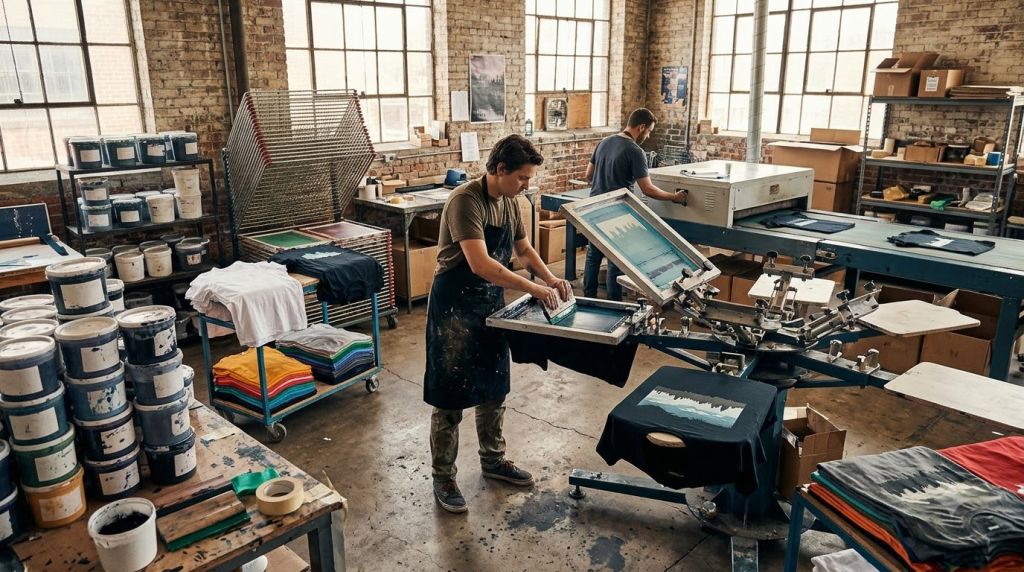
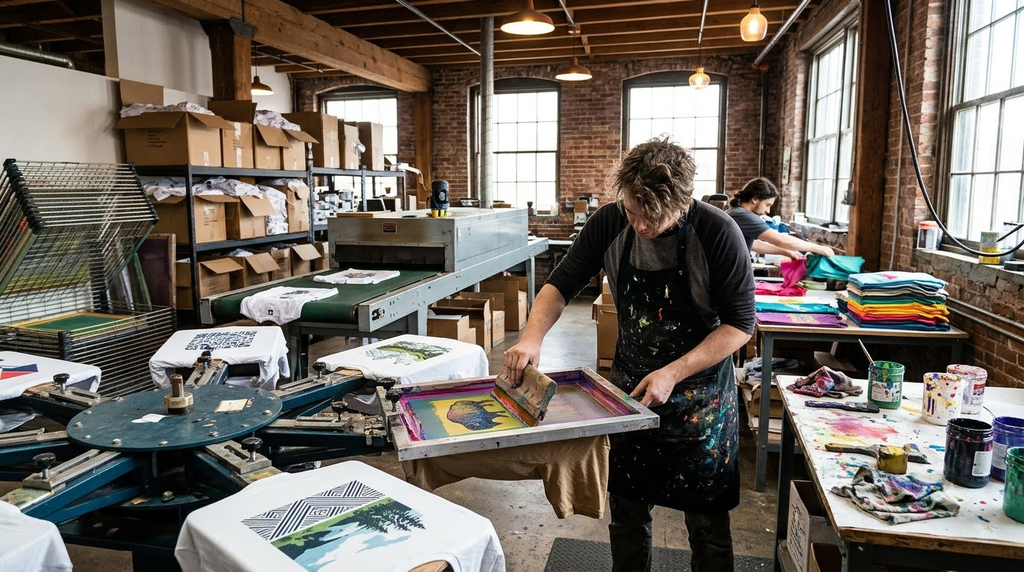
Professional screen printing remains the gold standard for t-shirt printing on work uniforms. Traditional plastisol ink sits solidly on top of the fibers, creating a flexible, weather-resistant barrier that stretches with the fabric rather than snapping under tension.
Plus, production quality depends heavily on shop expertise-
- Proper curing – Reaching the exact plastisol ink cure temperature (typically around 320°F) bonds the ink permanently to the shirt. Under-cured ink washes out; over-cured ink becomes brittle.
- Underbase precision – Dark shirts and neon safety tees need a smooth white underbase so the brand colors can pop clearly from across the street.
- Low bleed inks for polyester – Printing on synthetic performance shirts requires dye-blocking inks. Without them, the shirt’s bright dye bleeds into the logo, and your white lettering turns pink or yellow.
When ordering Omaha screen printing shirts, asking about ink chemistry and curing standards separates commercial-grade uniform suppliers from hobbyist print shops.
Color Selection, Branding Placement, and Safety Compliance
Workwear does both jobs at the same time. It makes the workers visible and turns the whole crew into a moving advert. It’s all about smart design to achieve both of those objectives without any increase in production cost.
Safety and Stain-Hiding Colors
Job-site environments dictate the smartest color palette-
- Roadside and heavy equipment crews – Follow ANSI safety apparel standards by choosing certified safety green or safety orange shirts, paired with reflective striping when working near traffic.
- Landscaping and tree services – Charcoal, heather gray, forest green, and dark navy hide mulch dust, oil spots, and grass stains effortlessly.
- Roofing and exterior remodeling – Lighter heather grays and sand tones reflect direct sunlight better than solid black, keeping workers cooler on exposed rooftops.
High-Impact Logo Placement
Keep artwork bold, legible, and strategic. Intricate, fine-line graphics get lost from twenty feet away.
- Front left chest – A clean 3.5-to-4-inch logo establishes brand identity during face-to-face client conversations.
- Full back print – Use large, high-contrast typography for the company name, core service, and phone number or website. When crews are bent over installing sod or framing a deck, the back of the shirt faces passing traffic.
- Sleeve prints – Adding a small flag or secondary badge adds polish, though extra print locations increase setup fees.
Contractors searching for custom shirts near me often cut per-unit costs significantly by sticking to one-color or two-color designs with high contrast. Simple designs read faster. And they cost less to print.
Step-by-Step Checklist for Working with Omaha Printers
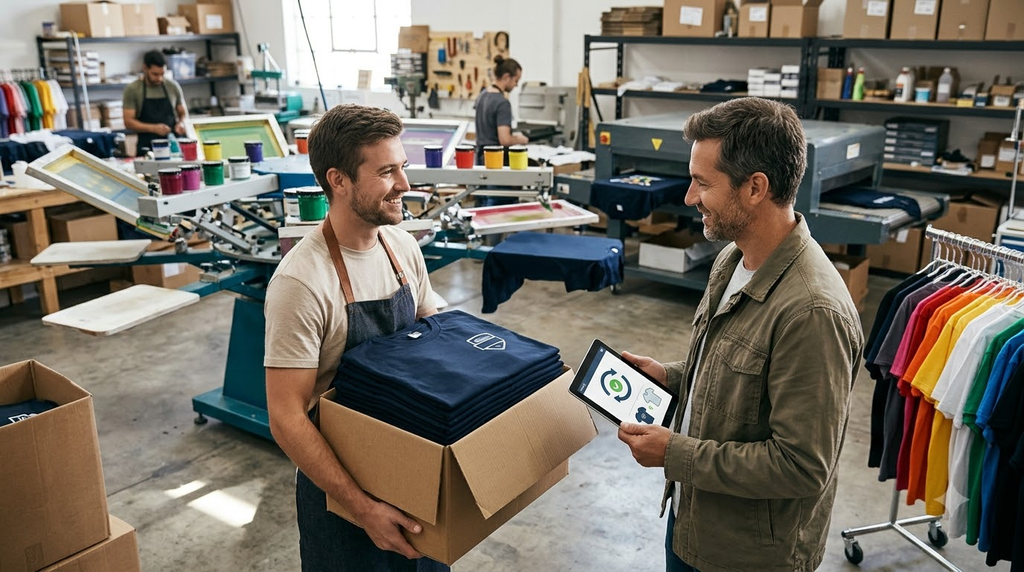
Ordering uniforms for a growing crew does not need to stall project schedules. Following a structured process keeps sizing accurate, artwork sharp, and turnaround times predictable when partnering with local Omaha printers.
- Audit crew needs by season – Separate orders into spring/summer lightweight blends (short-sleeve and breathable long-sleeve) and fall/winter heavyweight cotton or hoodies.
- Collect real sizing data – Ask crew members for their preferred work fit rather than guessing. Outdoor workers frequently size up one notch for airflow and range of motion.
- Prepare vector artwork – Supply logo files in vector formats (AI, EPS, or print-ready PDF) so lines stay crisp at full-back scale without pixelation.
- Confirm ink and fabric compatibility – Verify that the print shop uses dye-blocking inks if ordering neon safety polyester or dark heather blends.
- Order a 15% buffer stock – Add extra medium, large, and XL shirts to handle mid-season hires or unexpected job-site damage without paying small-batch reorder fees.
- Inspect a digital proof before press – Double-check phone numbers, spelling, print dimensions, and ink colors before approving final production.
Choosing a local partner over an out-of-state online broker eliminates guesswork. Buyers searching for custom printed t-shirts near me gain the advantage of feeling fabric weights in person, reviewing exact color swatches, and securing faster local reorders when a big project lands unexpectedly.
Key Takeaways
- Heavyweight 6.0oz cotton for protection from abrasion and sparks, moisture-wicking blends for landscapers to stay cool.
- Properly cured plastisol screen printing will outlast both vinyl and digital prints when subjected to intense sun and heavy laundering.
- Dye blocking underbase inks are absolutely vital for keeping the logos crisp on neon polyester and high visibility safety shirts.
- Bold, high-contrast back prints with clear contact details turn an active outdoor crew into a very consistent local lead generator.
- Order a small buffer stock of the common sizes to avoid the expense of rush reorders during the peak months of hiring.
Final Words
Outfitting an outdoor crew comes down to balancing worker comfort, job-site toughness, and sharp brand visibility. By matching fabric weights to daily tasks, insisting on properly cured plastisol inks, and choosing colors built for safety and stain resistance, contractors get apparel that works as hard as the people wearing it. Investing in quality Omaha screen printing shirts lowers replacement costs and builds instant trust at every residential and commercial site.
Ready to upgrade crew uniforms before the next busy season hits? Contact Omaha Print Shop today to request a custom quote, compare workwear fabric samples in person, and get durable crew shirts printed on schedule.
Frequently Asked Questions
What is the best fabric weight for construction screen printed shirts?
Best fabrics to use are heavyweight 6.0oz to 6.5oz cotton or 50/50 cotton/polyester blends. They’re far more resistant to snagging, tearing and the effects of frequent hot water washing than your standard 4.3oz promotional tee.
How long do screen-printed logos last on outdoor work shirts?
Properly cured plastisol screen prints can easily last 50 to 100 washes without cracking or peeling. That lifespan can be significantly reduced by heavy daily exposure to the sun and by the use of harsh bleach. Cold water washing is recommended.
Can safety neon work shirts be screen printed without dye migration?
Yes. Experienced printers will use low-bleed poly-white underbase inks and very strict cure temperatures to stop the neon polyester dyes from bleeding into the logo and thus keep the dark and white graphics very crisp.
What shirt colors hide dirt and grass stains best for landscaping crews?
Heather gray, charcoal, forest green and dark navy all hide soil, mulch and grass stains very effectively. High-visibility safety green is another one of the popular choices when you’re working right next to an active roadway.
What is the typical minimum order for custom crew shirts in Omaha?
The vast majority of local screen printing shops will have a minimum order of between 12 and 24 shirts per design. The more you order into the higher tiers (48, 72, etc.), the lower the per-shirt cost becomes.