Most people don’t think about this until they’re staring at a decision they didn’t know they’d have to make: how should your logo go on the shirt? Printed on, or stitched in? It sounds small. It isn’t. That little choice affects how your brand looks in six months, how much you’ll spend, and honestly, how put-together your team looks walking into a room.
If you’ve ever ordered branded gear for a business, a store opening, a company picnic, or just your staff’s everyday uniforms, you’ve probably run into this fork in the road: screen printing and embroidery. Both are good. Both have been around for a long time for a reason. But they’re not the same tool, and using the wrong one for the job usually shows up later, sometimes literally, when the logo starts peeling or fading after a few washes.
So let’s actually walk through it. Without any overexaggeration on what each method is good at, when to use which one, and a few real apparel options to make the decision easier.
What’s the Actual Difference Between Screen Printing and Embroidery?
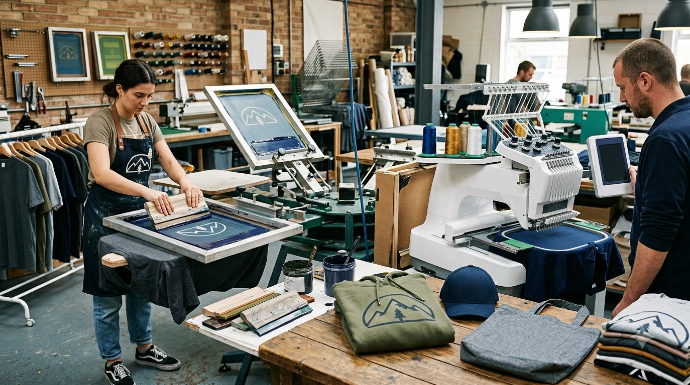
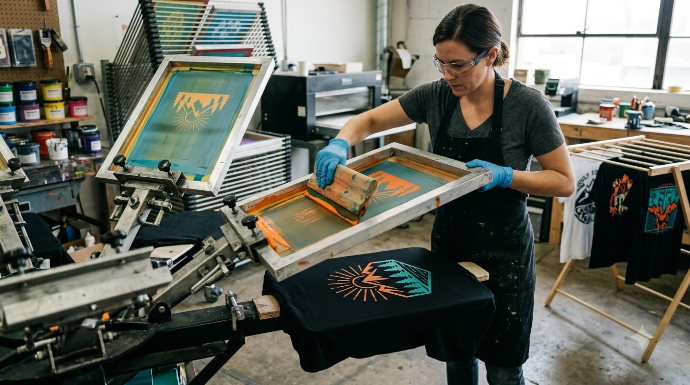
Screen printing is ink. A mesh stencil lays down color, layer by layer, right onto the fabric. It’s great when a design has a lot going on, multiple colors, gradients, fine detail, because it can handle that kind of complexity well. It also plays nicely with cotton and cotton-blend shirts, which is a big reason it’s the go-to for most t-shirt printing in Omaha and similar casual apparel.
Embroidery is thread. Instead of color sitting on top of the fabric, it’s stitched right into it, so you get texture, a bit of dimension, and honestly, that “this company has its act together” look. That’s exactly why it’s still the standard for uniform embroidery services at places like law offices, clinics, hotels, and pretty much anywhere staff is representing the brand face-to-face, every day.
Neither one wins across the board. They’re just built for different jobs.
When Screen Printing Is the Right Call
A few situations where printing usually makes more sense:
- Big, detailed artwork
Multi-color logos, gradients, photo-style graphics – these show up nicely on flat apparel like tees and hoodies.
- Bigger order sizes
Once the screens are made, printing more units doesn’t cost much extra, so it’s the smarter route for large teams, events, or retail batches.
- Comfort matters
Newer printing inks are thinner and softer than they used to be, so even performance wear stays breathable.
- Tight budgets, big orders
If you’re handing out business logo t-shirt printing at a trade show or community event, printing usually comes out cheaper per shirt once quantities go up.
Basically, if it’s for a one-day event, a giveaway, or casual company gear where the visual pops matter more than the feel of the logo, printing is probably your answer.
When Embroidery Is the Right Call
Embroidery earns its keep when things need to last and look sharp doing it.
- Daily uniforms – Stitched logos survive wash after wash without losing their shape or color, which matters a lot for staff who wear the same shirt or polo every day.
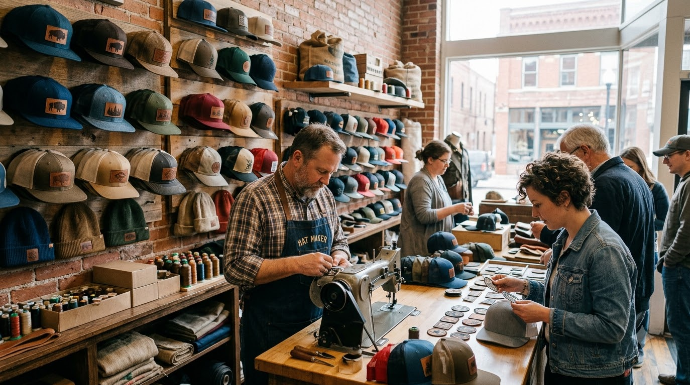
- Structured pieces – Polos, jackets, button-downs, and custom hats in Omaha all take embroidery well because the fabric has enough body to hold the stitching.
- Longevity – Thread doesn’t crack or flake the way printed ink sometimes can after years of wear and washing.
- A more polished first impression – People tend to associate embroidery with quality, which matters if your team is meeting clients face-to-face.
If you’re building out a uniform program you plan to keep for years, embroidery usually pays for itself even though it costs a bit more upfront.
A Few Apparels Worth Knowing About
Once you’ve picked a direction, the next question is what to actually put it on. Here are six solid options worth considering, each suited to slightly different needs.
- Port Authority® Dry Zone® UV Micro-Mesh 1/4-Zip – Lightweight, snag-resistant, and made from 4.6-ounce polyester pique with a UPF rating of 30. The cadet collar and matching zipper give it a clean look that holds up nicely with embroidered logos.
- Sport-Tek PosiCharge Competitor Polo – A 3.8-ounce polyester interlock polo with PosiCharge technology built in to lock in color. Good pick for uniform programs that get washed often.
- Gildan® Ultra Cotton® 100% US Cotton Tank Top – A soft 6-ounce cotton tank with a banded neck and a clean, seamless fit. Its smooth surface works well for printed graphics and event merchandise.
- Sport-Tek PosiCharge Competitor Tee – A breathable 3.8-ounce polyester tee that resists fading, making it a dependable choice for anyone doing t-shirt printing in Omaha; teams rely on it for daily or promotional wear.
- Jerzees® NuBlend® Pullover Hooded Sweatshirt – An 8-ounce cotton-poly hoodie with less pilling and a smoother surface, which makes it flexible enough for either bold prints or a stitched chest logo.
- Port & Company Classic Crewneck Sweatshirt – A cozy 7.8-ounce cotton-poly fleece crewneck, soft thanks to its air jet yarn, and a comfortable, budget-friendly option for casual company gear.
So, How Do You Actually Decide?
A handful of honest questions usually settle it:
- How often will it be worn? Every day, all year? Lean embroidery. One event, one time? Printing’s fine.
- How detailed is the design? Lots of color or fine detail leans toward printing. Simple, clean logos work great embroidered.
- How many pieces are you ordering? Larger quantities of simple designs usually make printing the more affordable route.
- What impression are you going for? If your team is client-facing, embroidery tends to read as more polished.
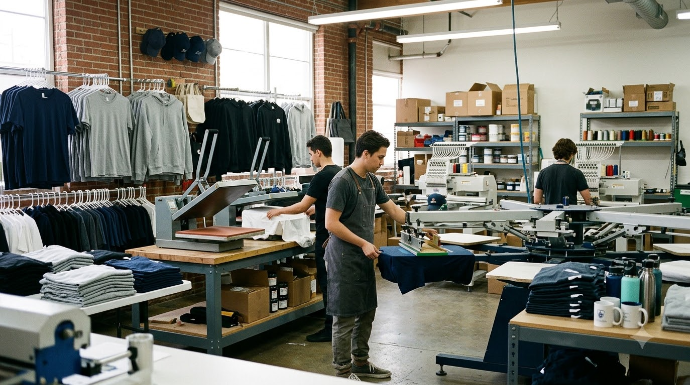
A lot of businesses end up doing both, embroidered polos and jackets for everyday staff wear, printed tees for events and giveaways. A corporate gear printing shop that knows both methods well can help you sort out which apparel needs which treatment before you commit to an order.
Wrapping It Up
At the end of the day, this decision comes down to how the apparel will actually be worn, how detailed your design is, and what kind of impression you’re going for. Neither method beats the other outright; it really depends on the job in front of you.
If you’re in the Omaha area and want a second opinion on custom apparel printing before placing an order, Omaha Print Shop has been doing both sides of this for a long time and is happy to help you figure out what’ll actually work best for your brand. Browse our website for more details or get an instant quote from our experts!
Frequently Asked Questions
Q1: Does embroidery really last longer than printing?
Yes, stitched logos typically hold up better through repeated washing than printed ones over time.
Q2: What’s better for a busy, colorful logo?
Screen printing handles detailed, multi-color designs better than embroidery does.
Q3: Can hats be printed instead of embroidered?
Hats are usually embroidered due to their shape, though flat-panel printing is possible.
Q4: Is printing cheaper for large orders?
Yes, screen printing usually costs less per piece once order sizes grow.
Q5: What’s best for everyday work uniforms?
Embroidery is generally the better fit for uniforms thanks to its clean, lasting look.